Statement walls
Large-format wall applications allow the marble to read as one composition. For a focal wall, fireplace backdrop or double-height feature, prioritize slabs with movement that remains legible from a distance.

COLLECTION · NATURAL STONE
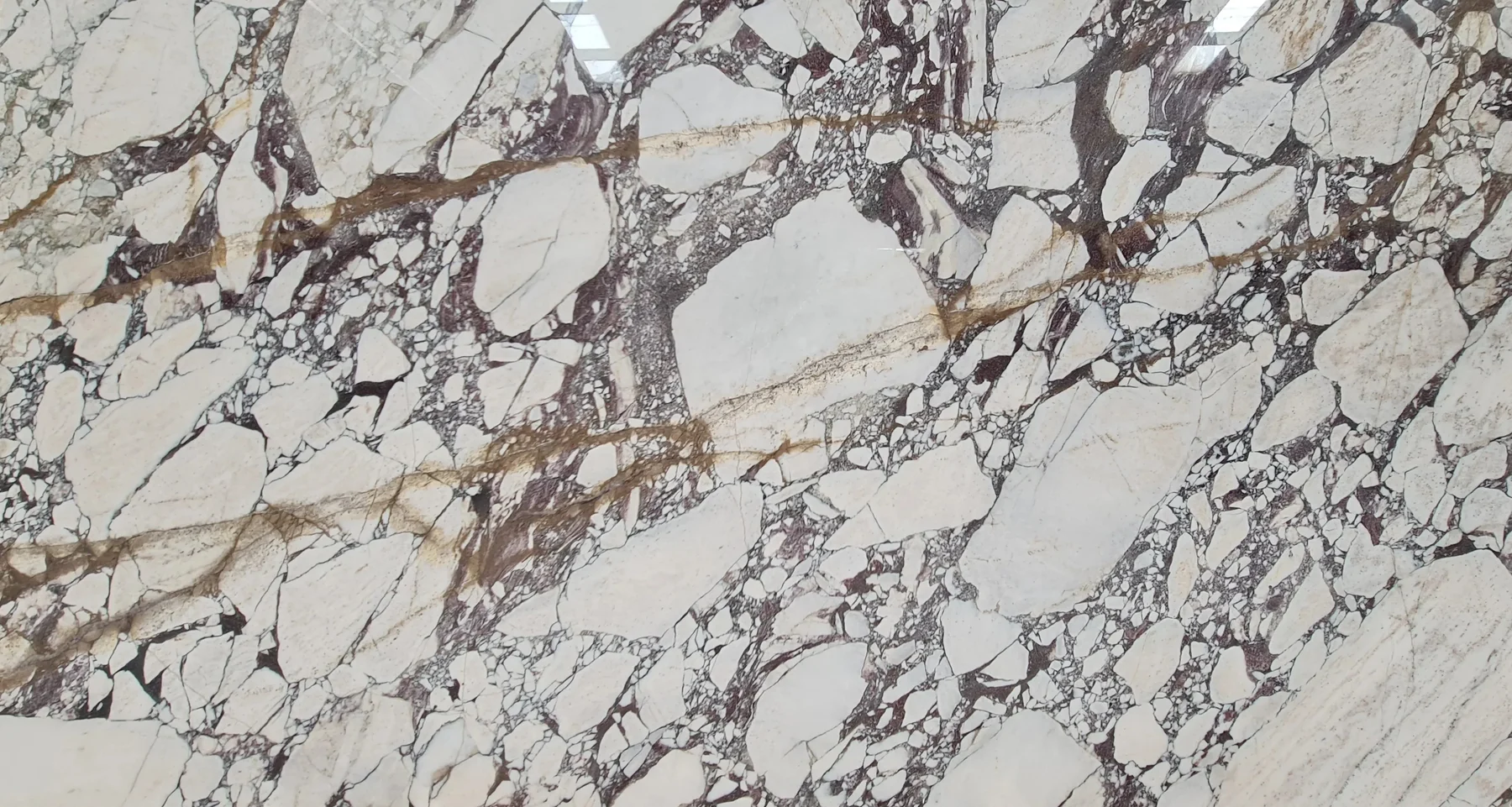
Calacatta Viola marble slabs with expressive burgundy-to-violet movement, selected for interiors where the natural stone becomes part of the architecture.
Calacatta Viola is chosen when the stone is intended to be seen at full scale. Its luminous field and concentrated wine, plum and violet movement create the kind of contrast that can define an entire room.
For interior designers and architects, the value of Calacatta Viola is not simply the color of the marble. It is the composition of each slab: where the open areas sit, how the veining travels, and whether neighboring slabs can create a balanced sequence across a wall, vanity, island or fireplace.
That is why selection should happen around the project rather than from a stone name alone. Atlas Marbles can review the intended application and use current slab photography to identify lots with the right visual rhythm.
SLAB VIEWS
DESIGN GUIDE
The strongest results begin with the application, not the sample. Scale, vein direction and the number of visible joints should all influence slab selection.
Large-format wall applications allow the marble to read as one composition. For a focal wall, fireplace backdrop or double-height feature, prioritize slabs with movement that remains legible from a distance.
On smaller architectural pieces, a concentrated section of veining can become the detail. Coordinate the slab layout with sink openings, edges and returns before fabrication.
A fireplace is naturally symmetrical, so slab orientation matters. A mirrored or carefully balanced composition can make the surround feel designed rather than simply clad.
For islands and waterfall ends, review the relationship between the top and vertical faces. Continuous visual movement can make a large mass of stone feel intentional and sculptural.
SLAB SELECTION
DESIGN WITH CALACATTA VIOLA
FREQUENTLY ASKED
Calacatta Viola is known for a pale background contrasted by strong burgundy, plum and violet-toned movement. The exact balance varies naturally from slab to slab, which is why full-slab selection matters.
It can be considered for bookmatched layouts when suitable sequential slabs are available. The final effect depends on the specific block, slab sequence and fabrication plan, so actual lot photography should be reviewed first.
It is especially impactful on statement walls, fireplace surrounds, vanity compositions, kitchen islands and custom stone furniture where enough surface area is visible to appreciate the movement.
Use the Atlas Marbles project inquiry form and include the application, approximate dimensions, project location and timing. We can then respond around the most relevant current selection.
PROJECT INQUIRY
Share the project location, application, timing and material direction. We’ll use the brief to prepare the most relevant next step.